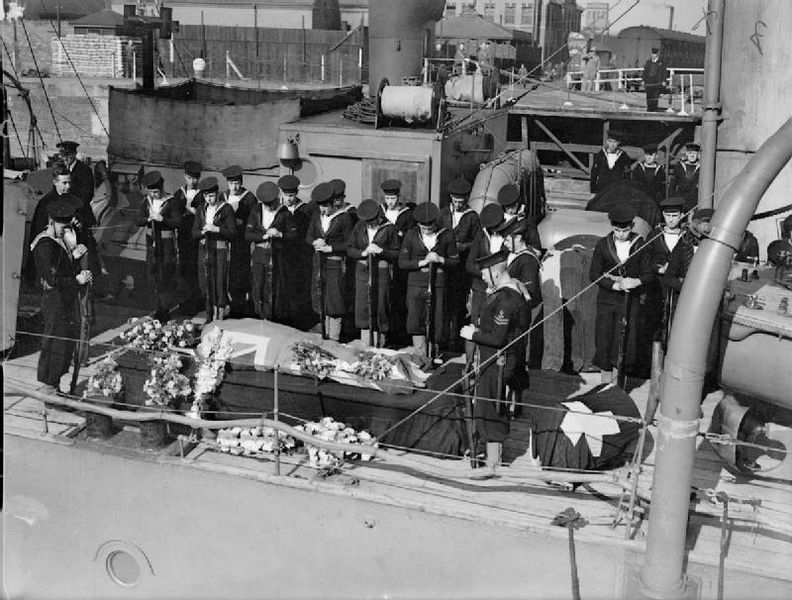
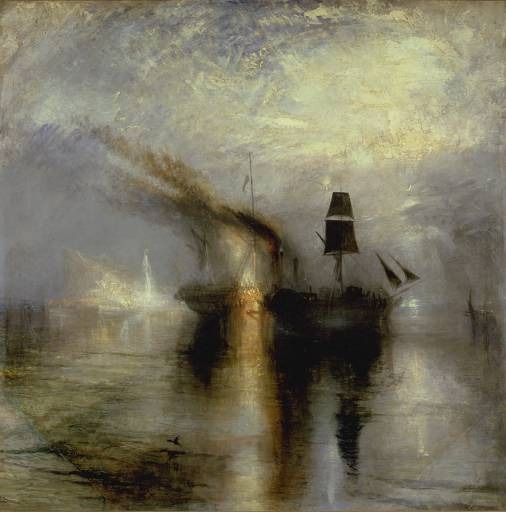
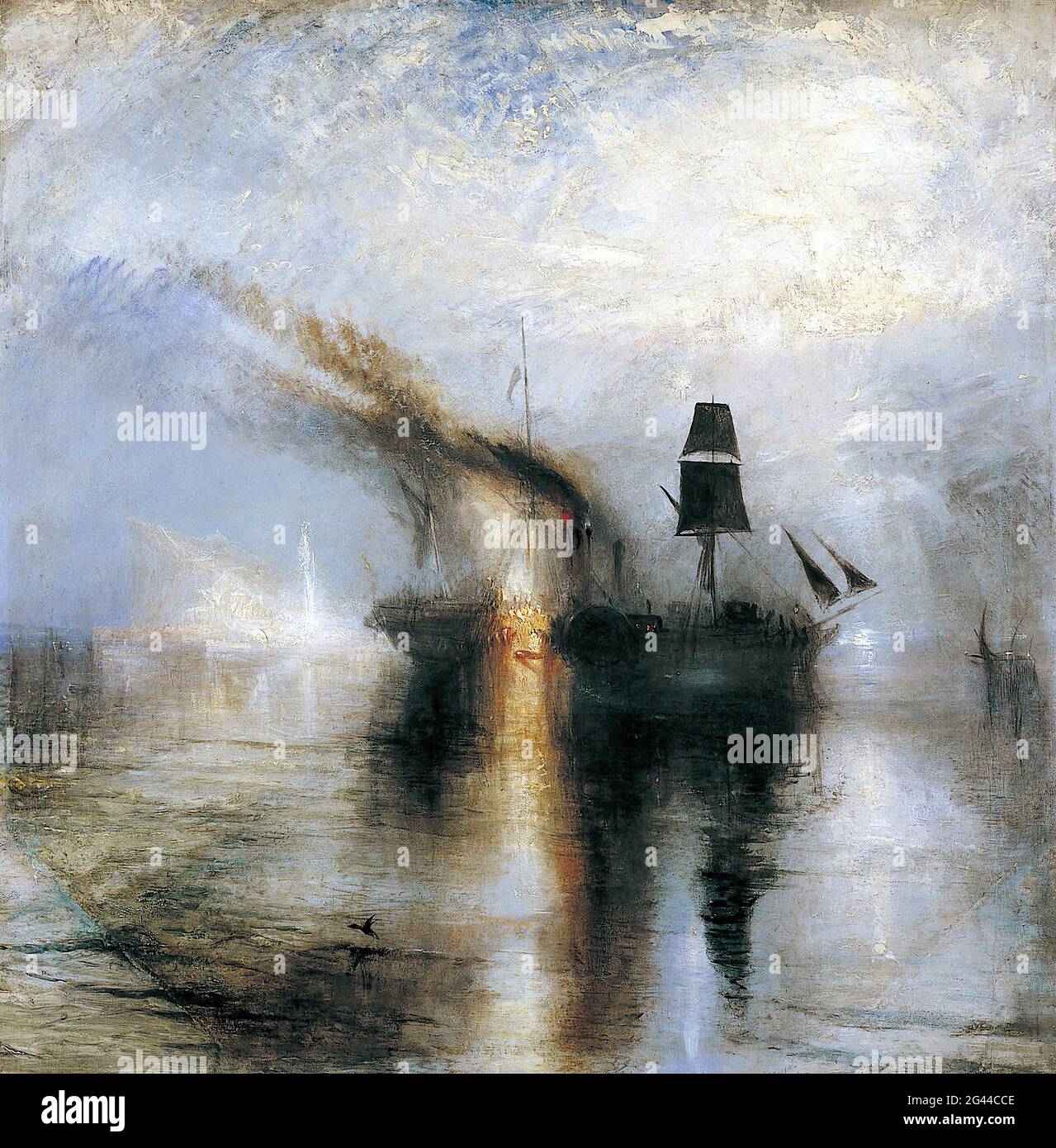
Peace – Burial at Sea is an oil painting on canvas by the English Romantic artist J. M. W. Turner (1775–1851), first exhibited in 1842. The painting serves as a memorial tribute to Turner's contemporary, the Scottish painter Sir David Wilkie (1785–1841), depicting Wilkie's burial at sea off Gibraltar. It was intended as a companion piece to War. The Exile and the Rock Limpet (also 1842) which alludes to the sordid demise of the former Emperor of France Napoleon Bonaparte (thus "War" and "Peace"). The two works are characterized by their sharply contrasting colours and tones: War utilizes a strident yellow and red while Peace is painted a cool blend of white, blue and black.
The painting was part of the Turner bequest gifted by the artist to the British nation in 1859, and is now in the permanent collection of Tate Britain.
In popular culture
The post-hardcore British band Peace Burial at Sea take their name from the painting.
In July of 2013, the National Gallery of Australia physically recreated the painting in real time with live action inclusive of a ship in Sydney Harbour in conjunction with the exhibit at the museum Turner from the Tate: The Making of a Master.
See also
- List of paintings by J. M. W. Turner
References
External links
- Media related to Peace - Burial at Sea (Turner) at Wikimedia Commons