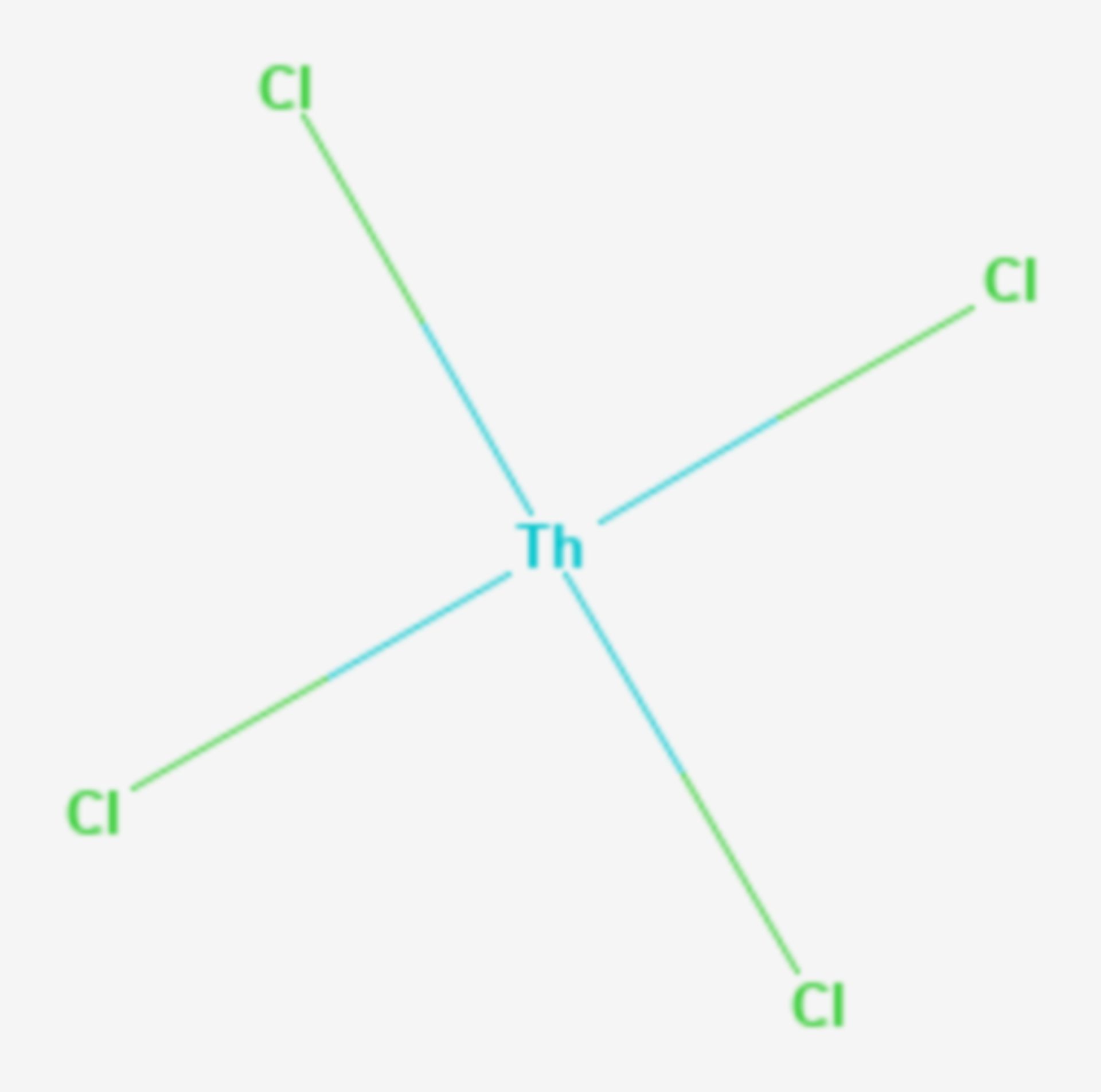
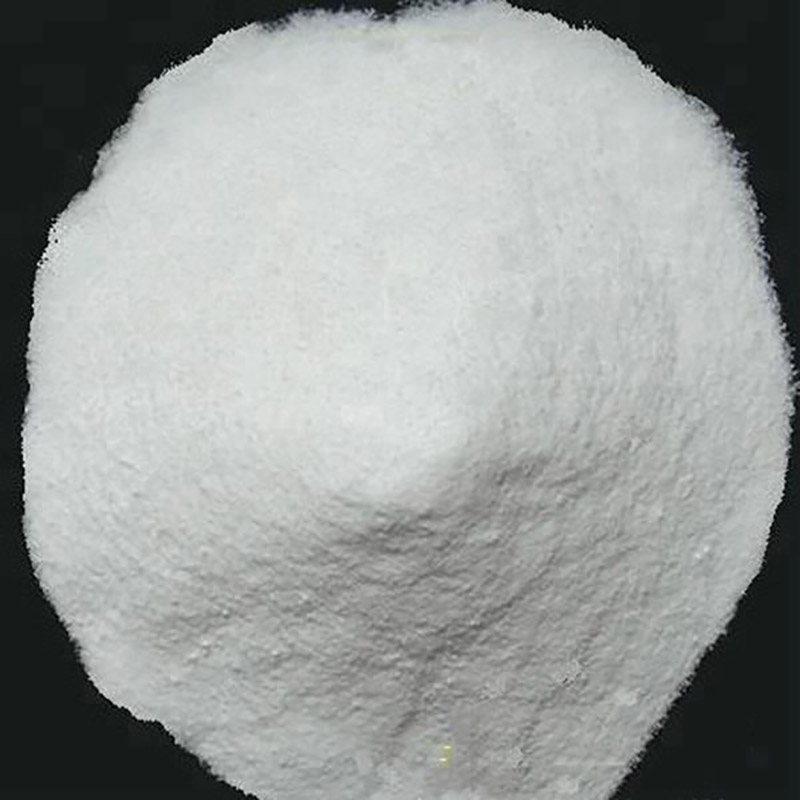
Thorium(IV) chloride describes a family of inorganic compounds with the formula ThCl4(H2O)n. Both the anhydrous and tetrahydrate (n = 4) forms are known. They are hygroscopic, water-soluble white salts.
Structures
The structure of thorium(IV) chloride features 8-coordinate Th centers with doubly bridging chloride ligands.
Synthesis
ThCl4 was an intermediate in the original isolation of thorium metal by Jons Jacob Berzelius.
Thorium(IV) chloride can be produced in a variety of ways. One method is a carbothermic reaction, 700 °C to 2600 °C, involving thorium oxides and carbon in a stream of chlorine gas:
- ThO2 2 C 4 Cl2 → ThCl4 2 CO
The chlorination reaction can be effected with carbon tetrachloride:
- Th(C2O4)2 CCl4 → ThCl4 3 CO 3 CO2
In another two-step method, thorium metal reacts with ammonium chloride:
- Th 6 NH4Cl → (NH4)2ThCl6 4 NH3 2 H2
The hexachloride salt is then heated at 350 °C under a high vacuum to produce ThCl4.
Reactions
- Lewis base adducts
ThCl4 reacts with Lewis bases to give molecular adducts, such as ThCl4(DME)2 and ThCl4(TMEDA)2.
- Reduction to Th metal
Thorium(IV) chloride is an intermediate in the purification of thorium, which can be affected by:
- Reduction of ThCl4 with alkali metals.
- Electrolysis of anhydrous thorium(IV) chloride in fused mixture of NaCl and KCl.
- Ca reduction of a mixture of ThCl4 with anhydrous zinc chloride.
References